As the sole designer at Fitternity, I helped pivot a gym-membership business overnight when COVID hit — building a whole suite of virtual fitness products to keep users moving at home, then easing them back into the gym as restrictions lifted.
I was the sole designer at Fitternity, an Indian startup that sold gym memberships. When the COVID pandemic hit in 2020, people stopped going to the gym and the business came to a standstill. During this time we built a whole suite of virtual products to help our users stay fit at home — and once gyms started reopening in the second half of 2020, we had to help users ease back into physical fitness options.
With gyms closed, the first job was to recreate the experience of a class — and a trainer — at home. Two products led the pivot.
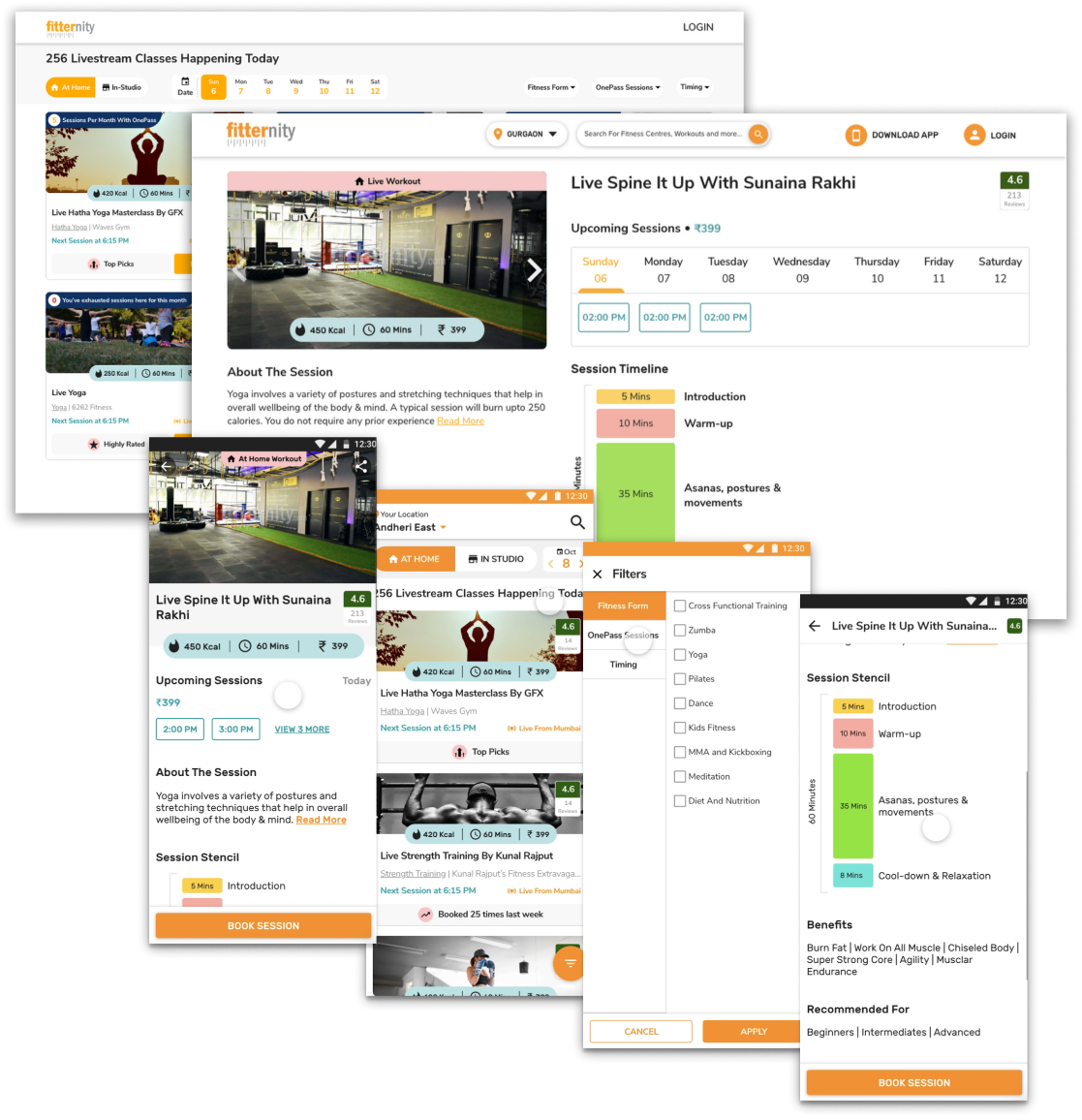
Before COVID, Fitternity let users book sessions in fitness studios. During the pandemic, I re-jigged that feature to let users book group fitness classes with their preferred trainers — offering a variety of options like Yoga, HIIT, Calisthenics and Cross-Fit. It helped us monetise, and gave fitness experts a platform to sell their services.
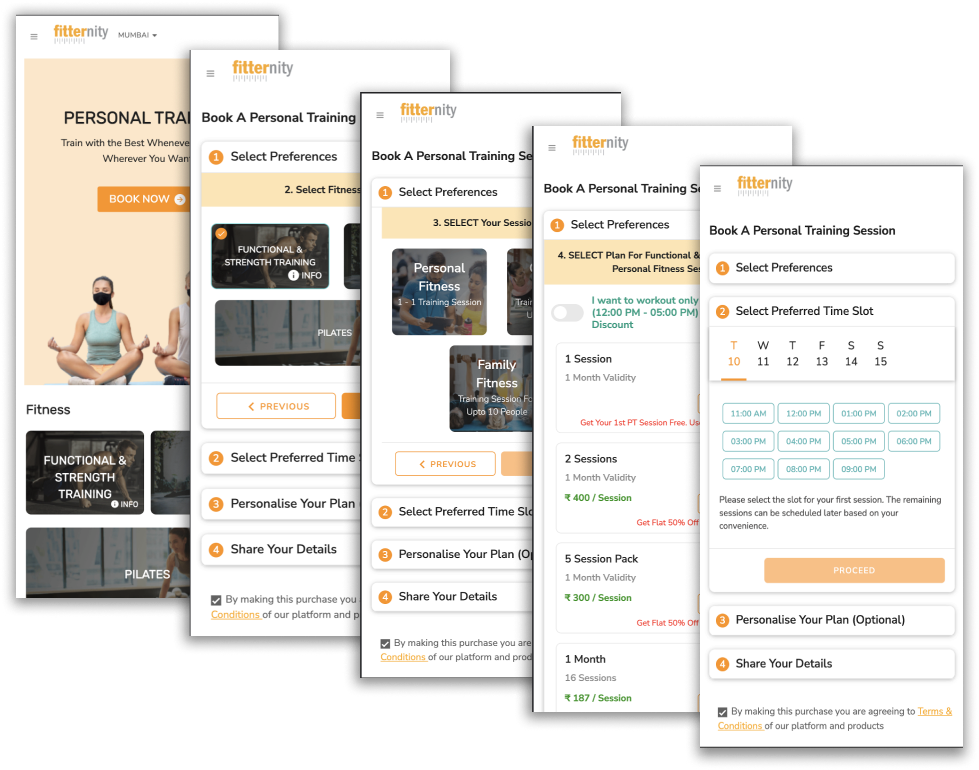
On similar lines to the classes, we launched a 1:1 training platform for people to book fitness and mental-health sessions. I introduced the ability to buy session packs, with a complete flow for users to add their preferences.
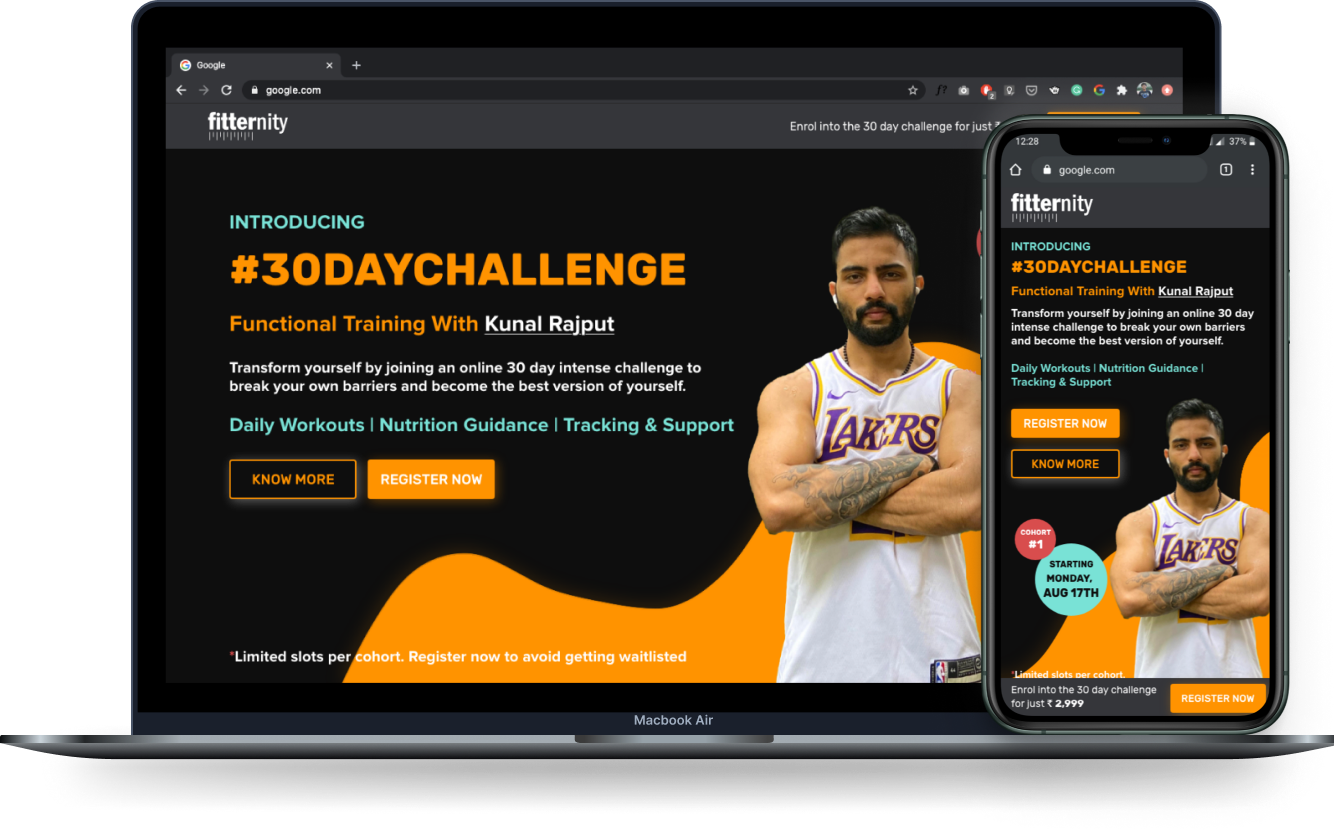
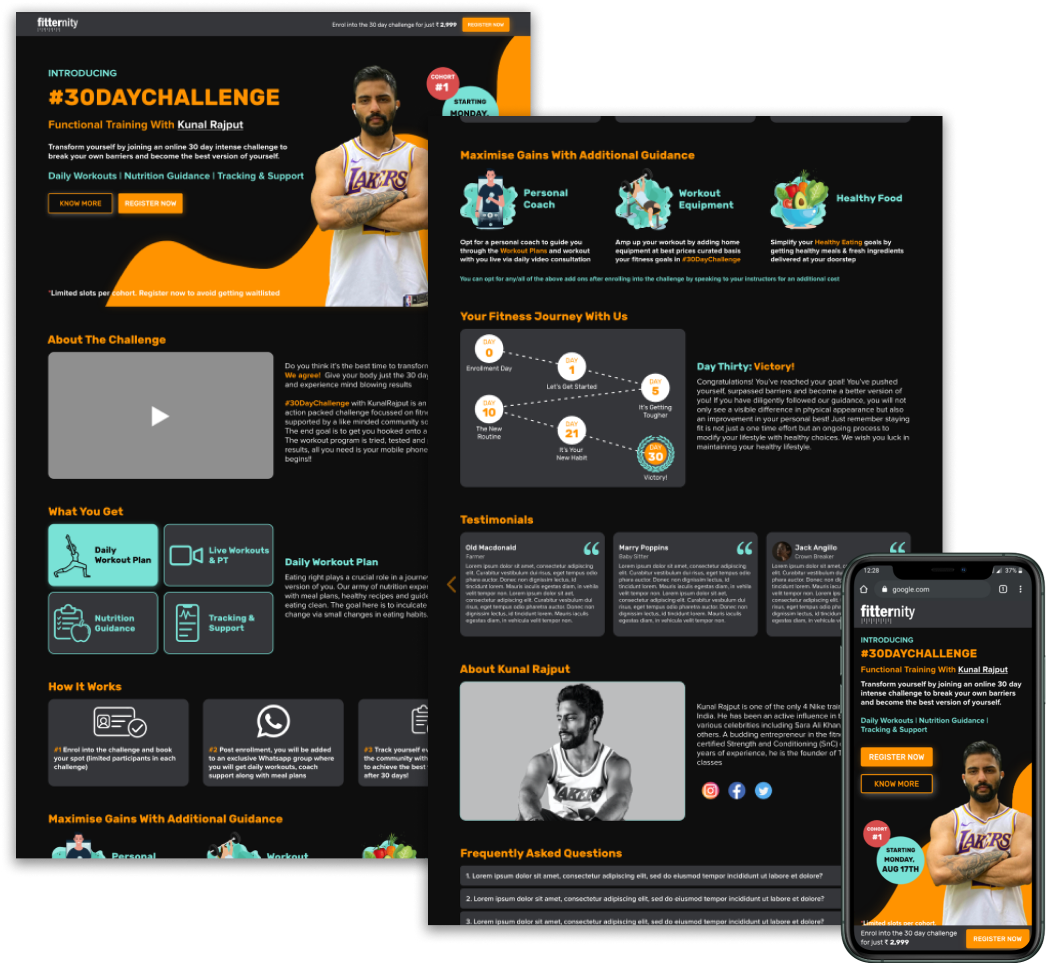
To improve the work-from-home experience, we cold-called Zoom Fitness Class users and discovered they needed more motivation, socialization and guidance. In response, we ran a pilot — the #30DayChallenge — featuring celebrity trainers, daily fitness plans, nutritional guidance, socialization opportunities and a weekly personal-training session, for a cohort of 30 users. It was promoted through a web landing page, with participants added to a WhatsApp group for fitness-plan delivery.
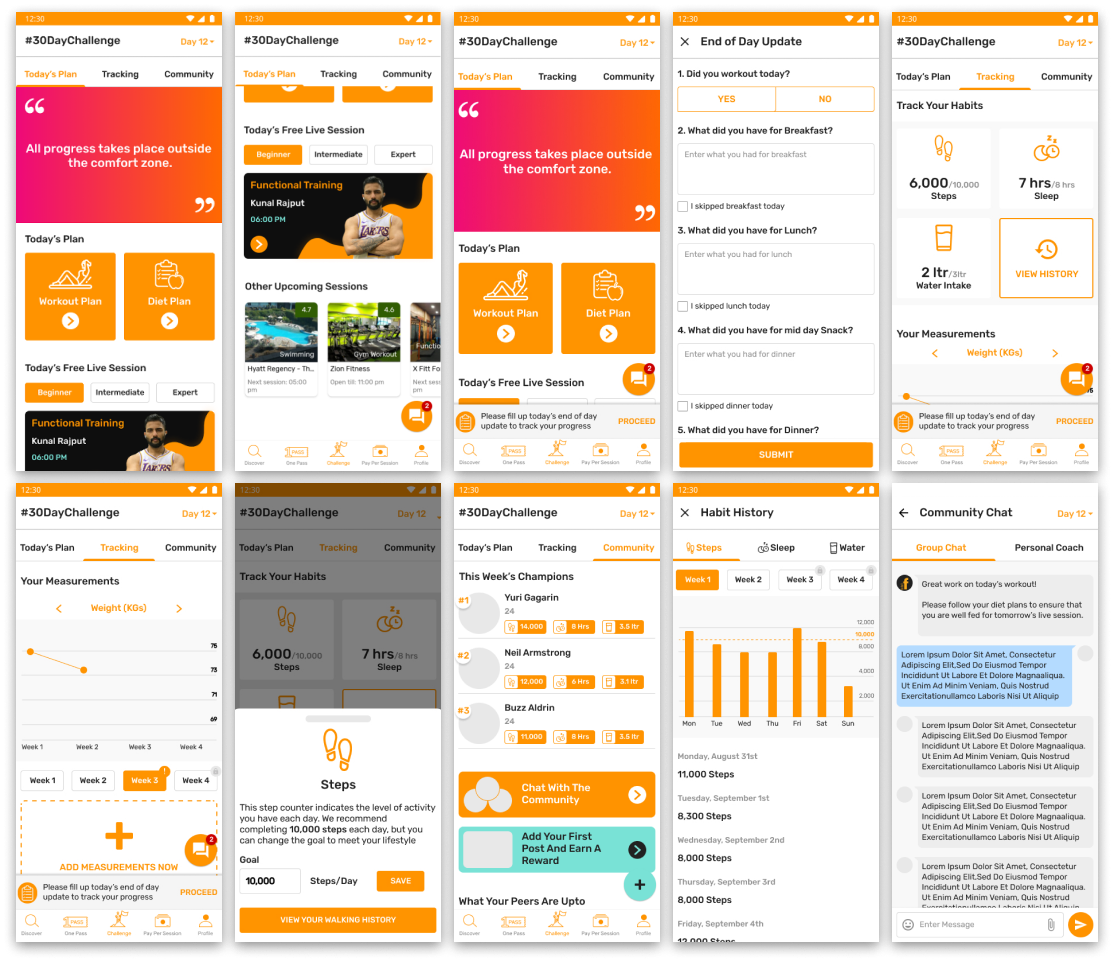
The initial cohorts of the #30DayChallenge were an instant hit, so we decided to turn it into a comprehensive app experience — designed to emulate the success of those first cohorts. Unfortunately, this experience was never developed, as Fitternity was acquired by cult.fit in January 2021.
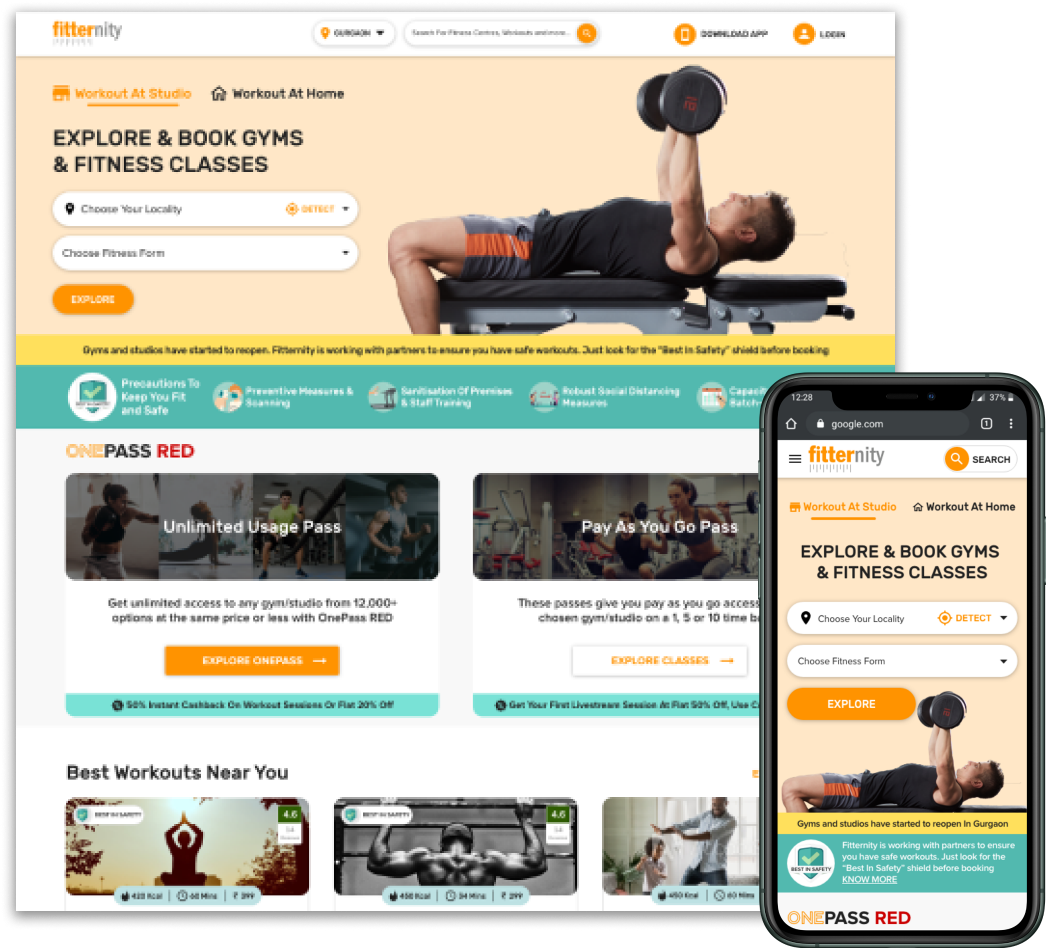
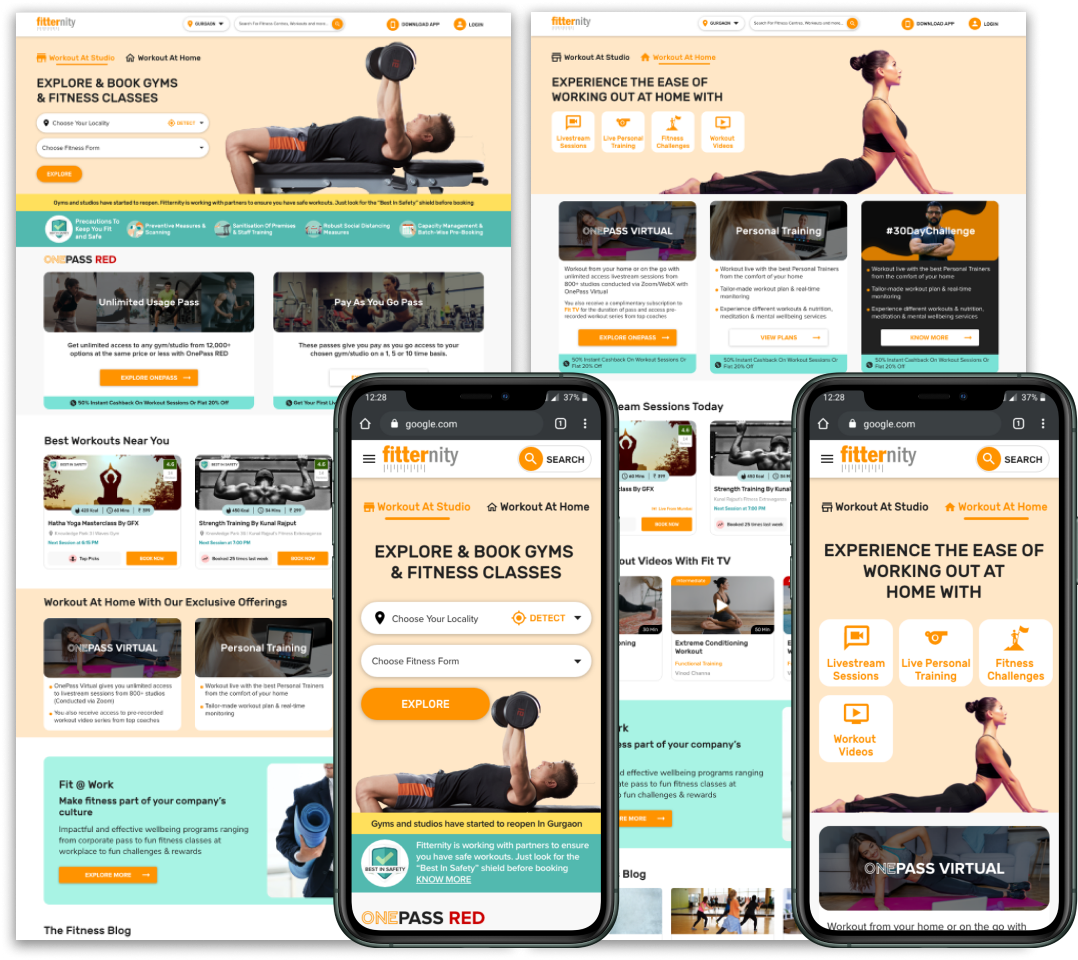
As lockdown restrictions eased and gyms began to open, we had to help users access both online and physical fitness options. I redesigned the homepage to hold both worlds at once, so members could move fluidly between an at-home class and a gym booking.
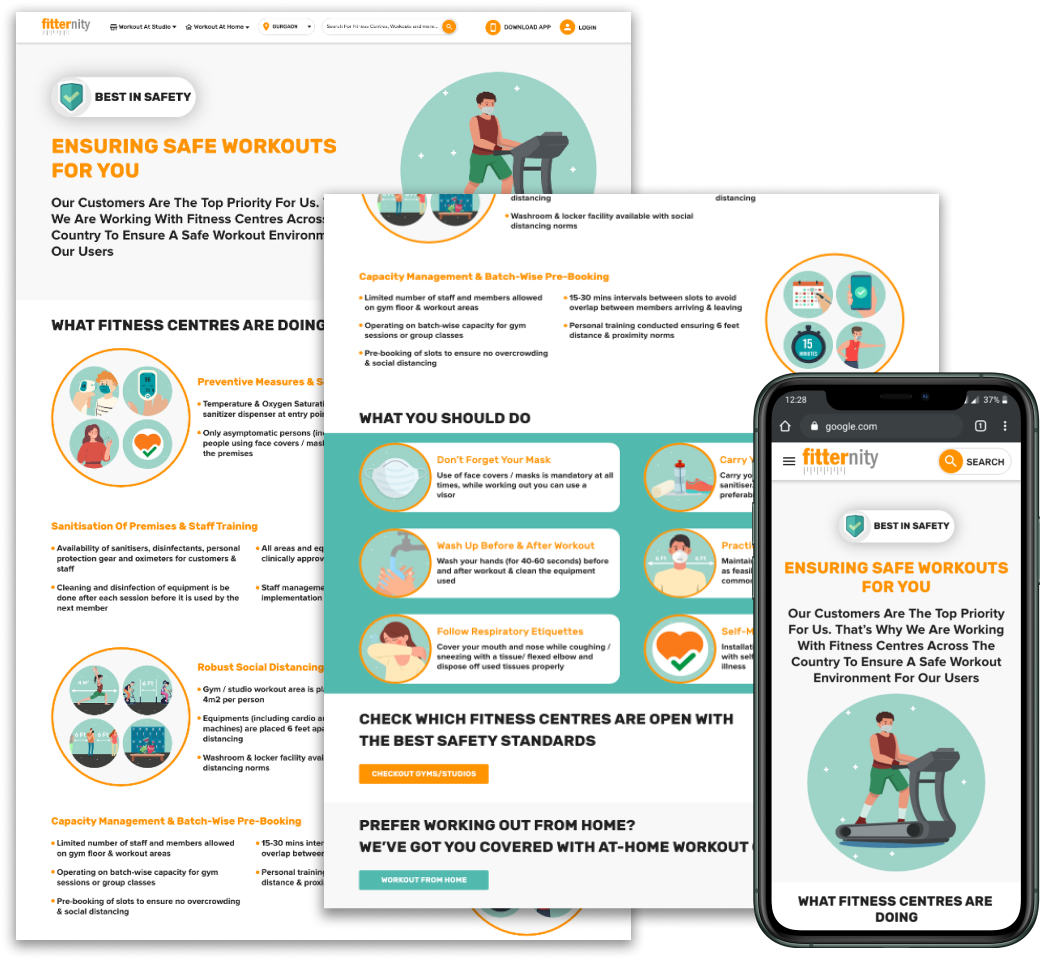
Going back to a gym in a pandemic took trust. To rebuild it, I created a set of fun illustrations (most adapted from Freepik), placed at strategic points in an infographic to educate users on the precautions gyms were taking — plus a landing page so members could understand every safety measure in place.
Speed is a survival skill. As the sole designer in a business at a standstill, shipping a virtual suite fast — research to UI — mattered more than perfecting any one screen.
Talk to users, then build. A round of cold calls turned a vague "home fitness" idea into the #30DayChallenge — motivation, social and guidance, exactly as asked for.
Reopening is its own design problem. Bringing people back to the gym was about trust as much as features — illustrations and clear precautions did real work.