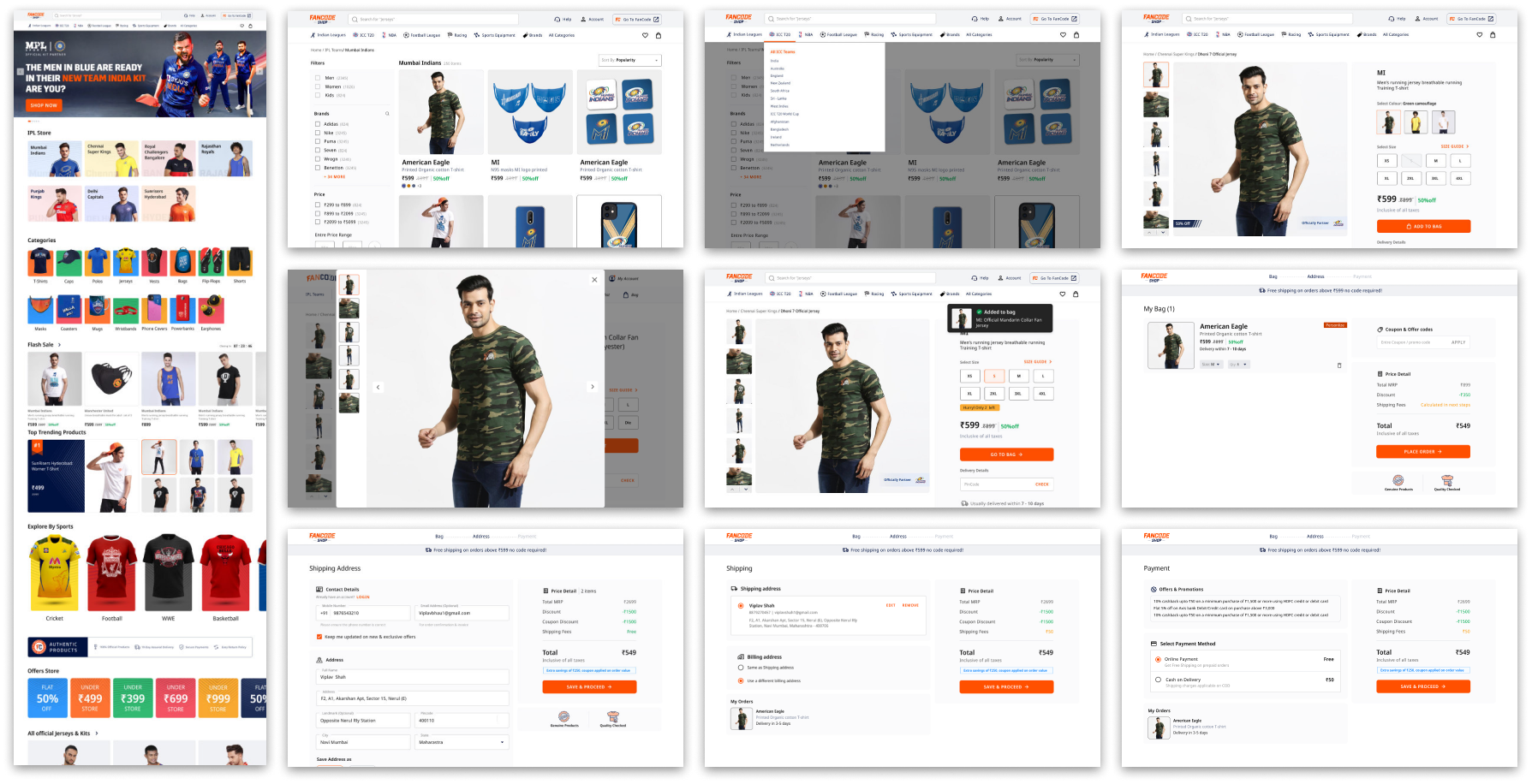
With the research done, I designed FanCode Shop end to end — defining its information architecture through card sorting, wireframing mobile-first, usability-testing every flow, and shipping a store that reached 2.5M monthly active users and spun off into its own company.
Following the exploratory research, I led the design of FanCode Shop — the in-app e-commerce experience for buying team and player merchandise. The work spanned the full stack of product design: information architecture, an open card-sorting study, mobile-first wireframes, rounds of usability testing, and the final UI across mobile and web.
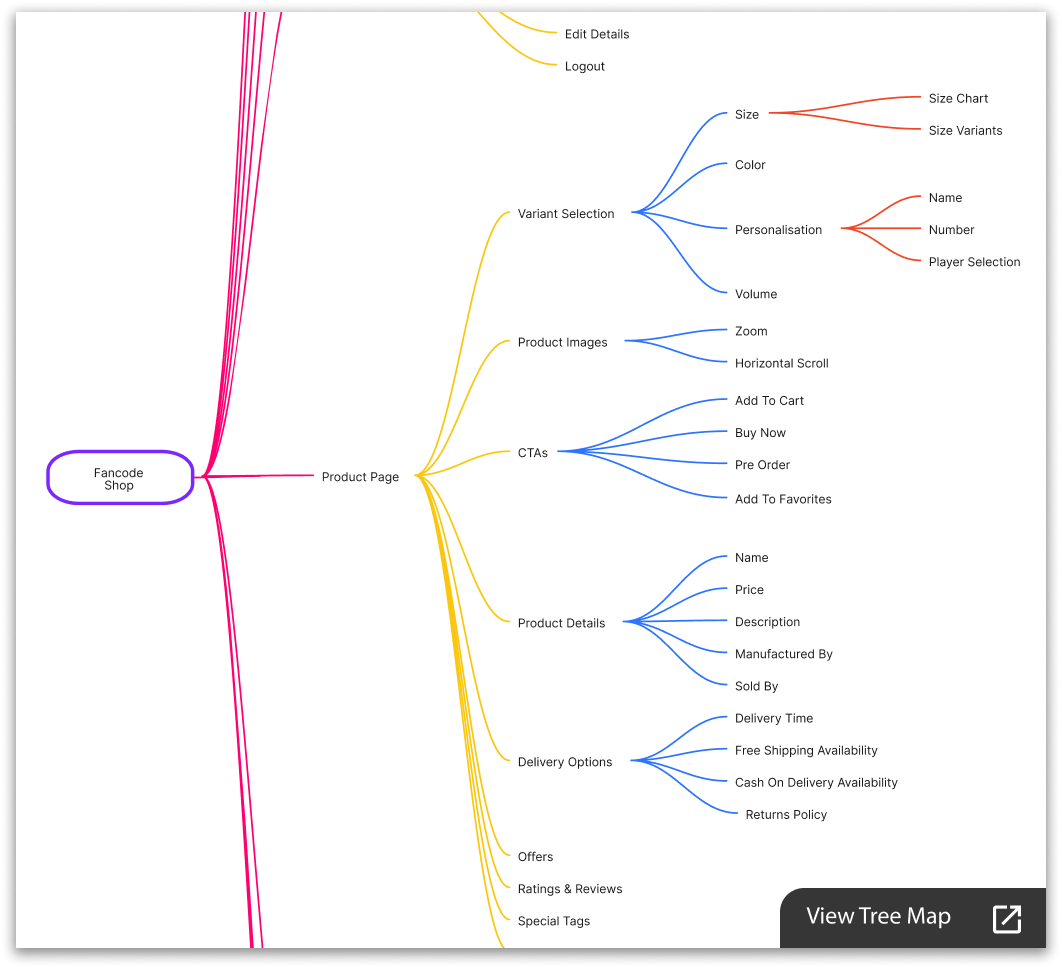
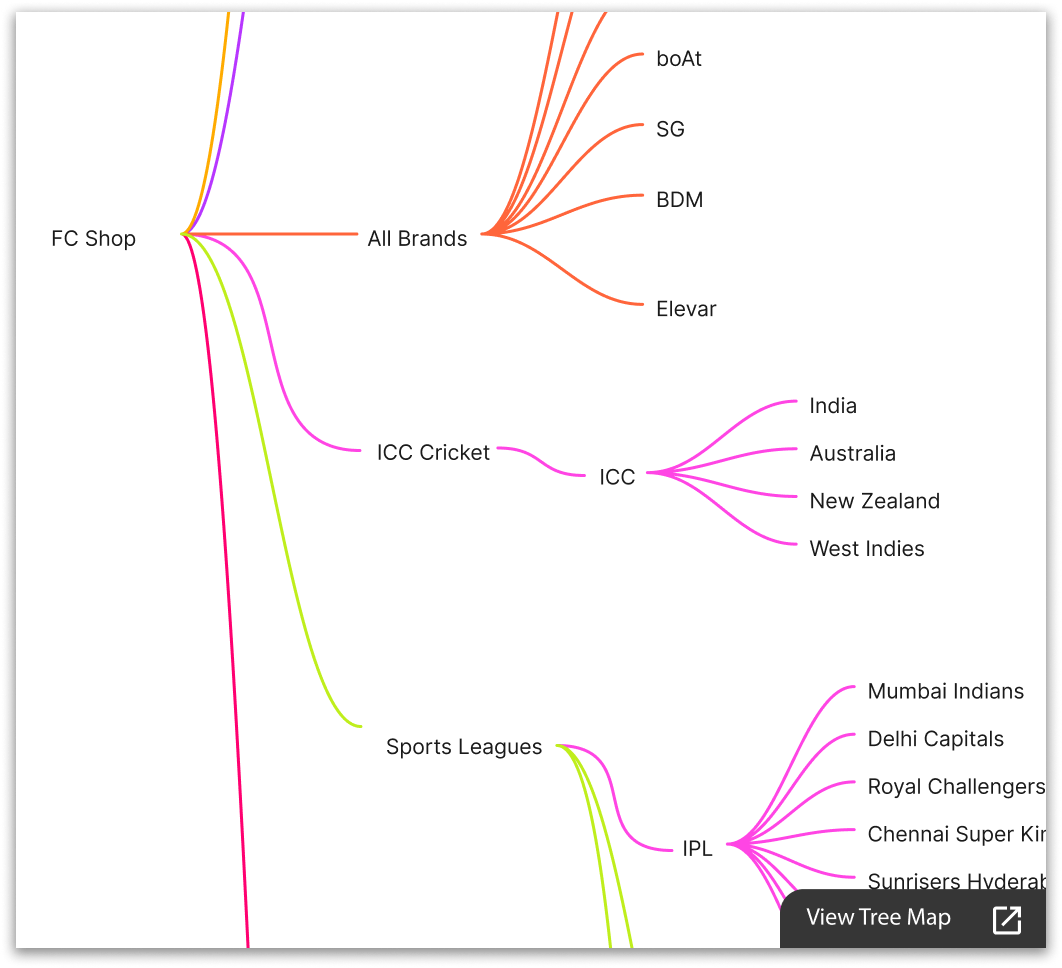
I defined the store's information architecture using secondary research on e-commerce websites — deliberately keeping it close to major e-com conventions so fans would find what they wanted exactly where they expected it. The information points were mapped into a tree diagram.
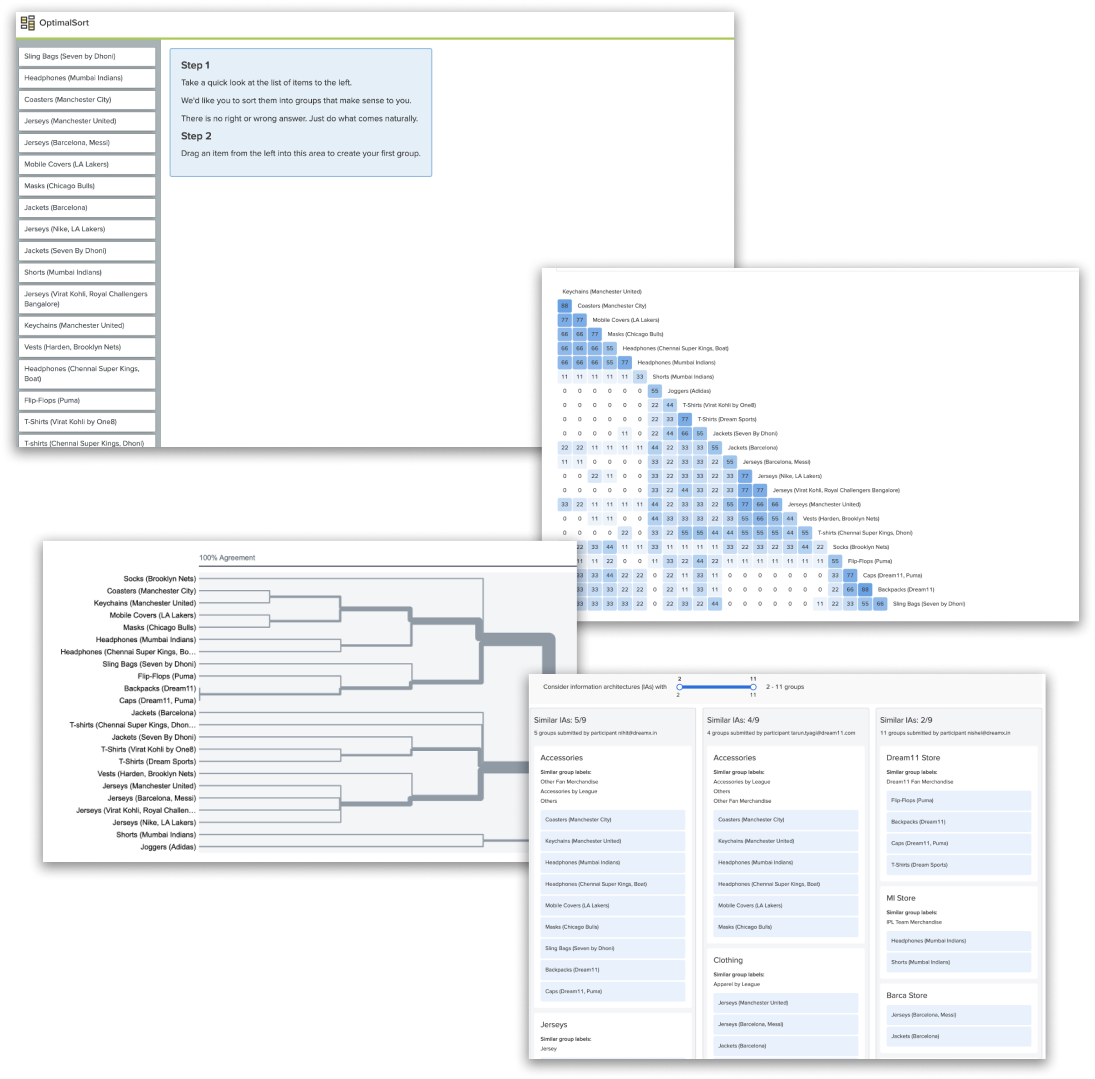
To decide how products should be grouped, I consulted the partnerships and inventory teams to identify candidate attributes, then ran an open card sort with sports fans. Twenty-five cards were created on Optimal Sort in the format "Product Type (randomized, comma-separated attributes)".
The results were clear: fans preferred to group products by Product Type and Team Affiliation. I categorized the catalogue accordingly — All Brands, ICC Cricket nations and Sports Leagues each branching into their teams.
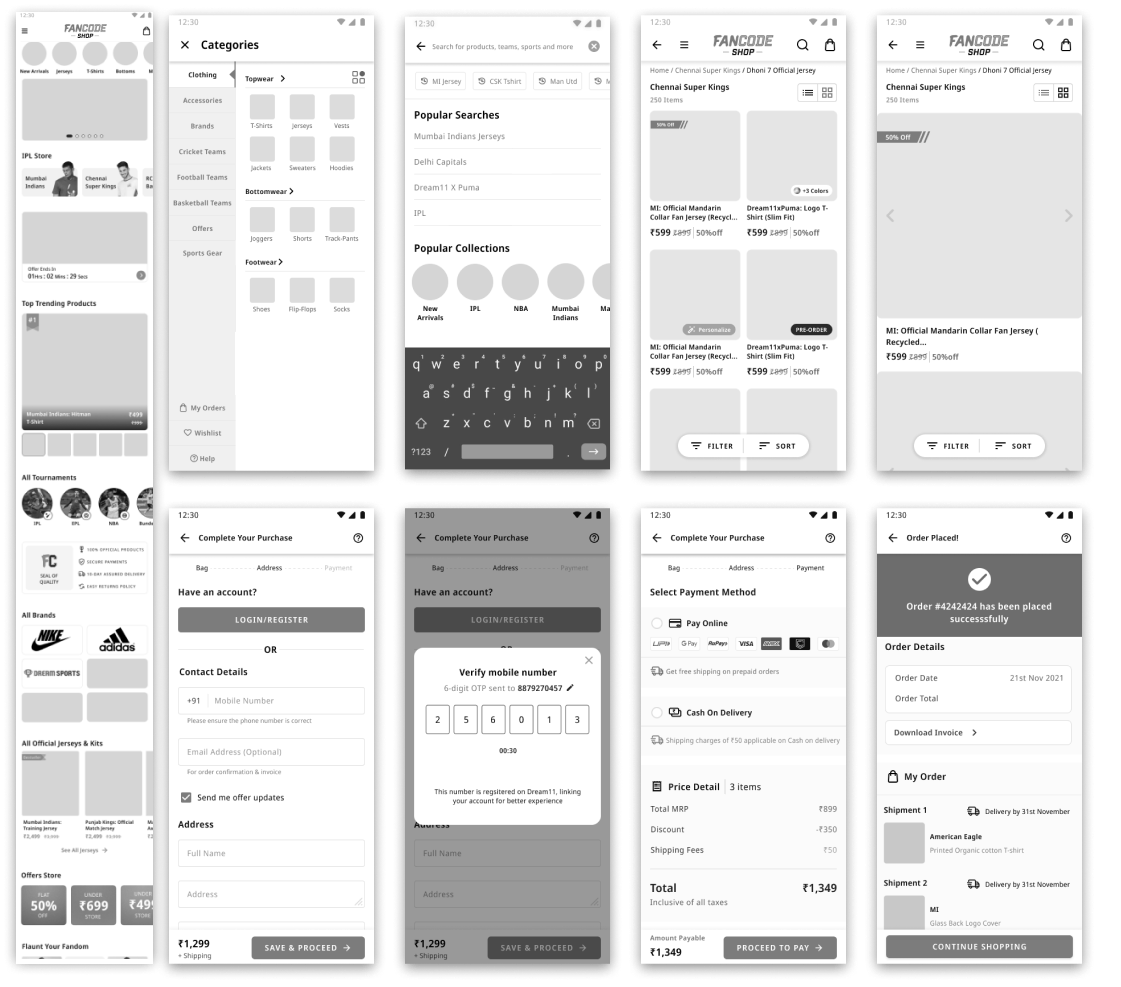
I built the wireframes by studying e-commerce websites and apps — starting with paper wireframes, then translating them into low-fidelity, mobile-first versions, since most of our users would be on phones. I ran thorough usability tests on these and iterated to refine them.
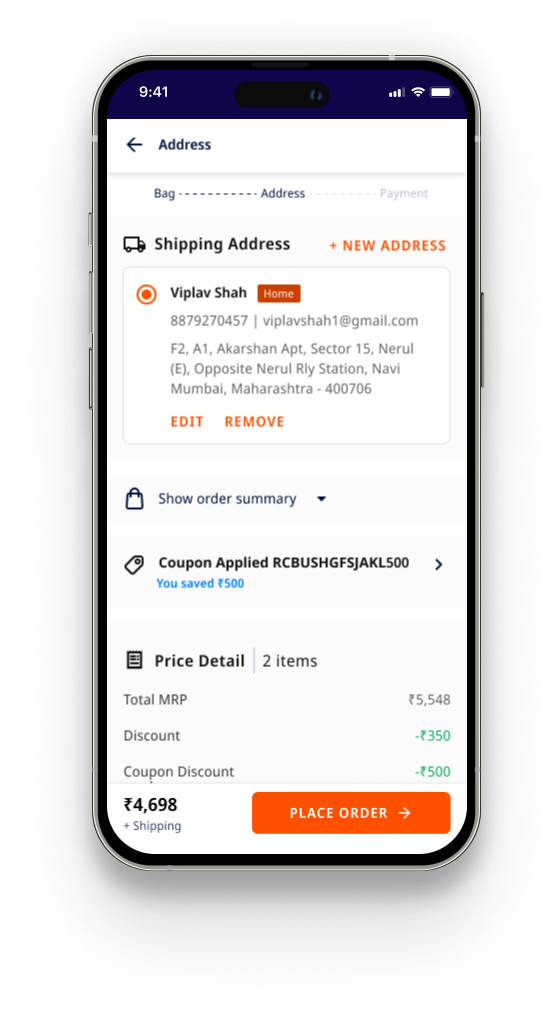
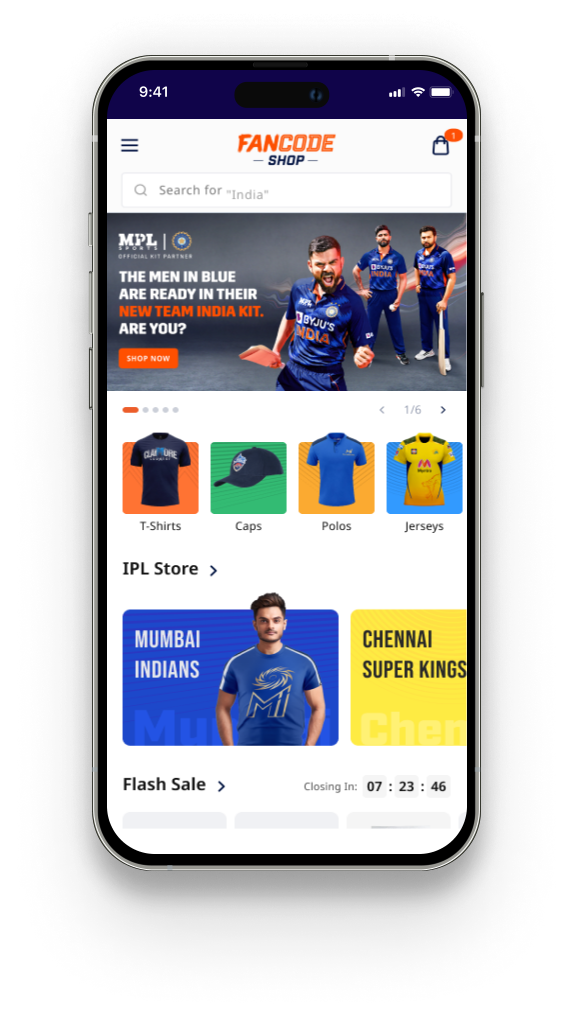
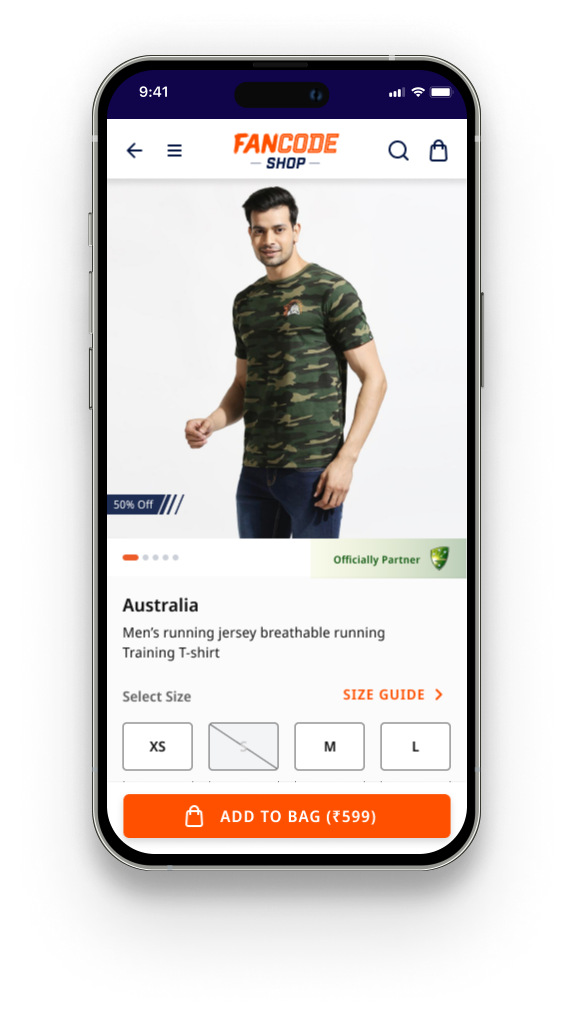
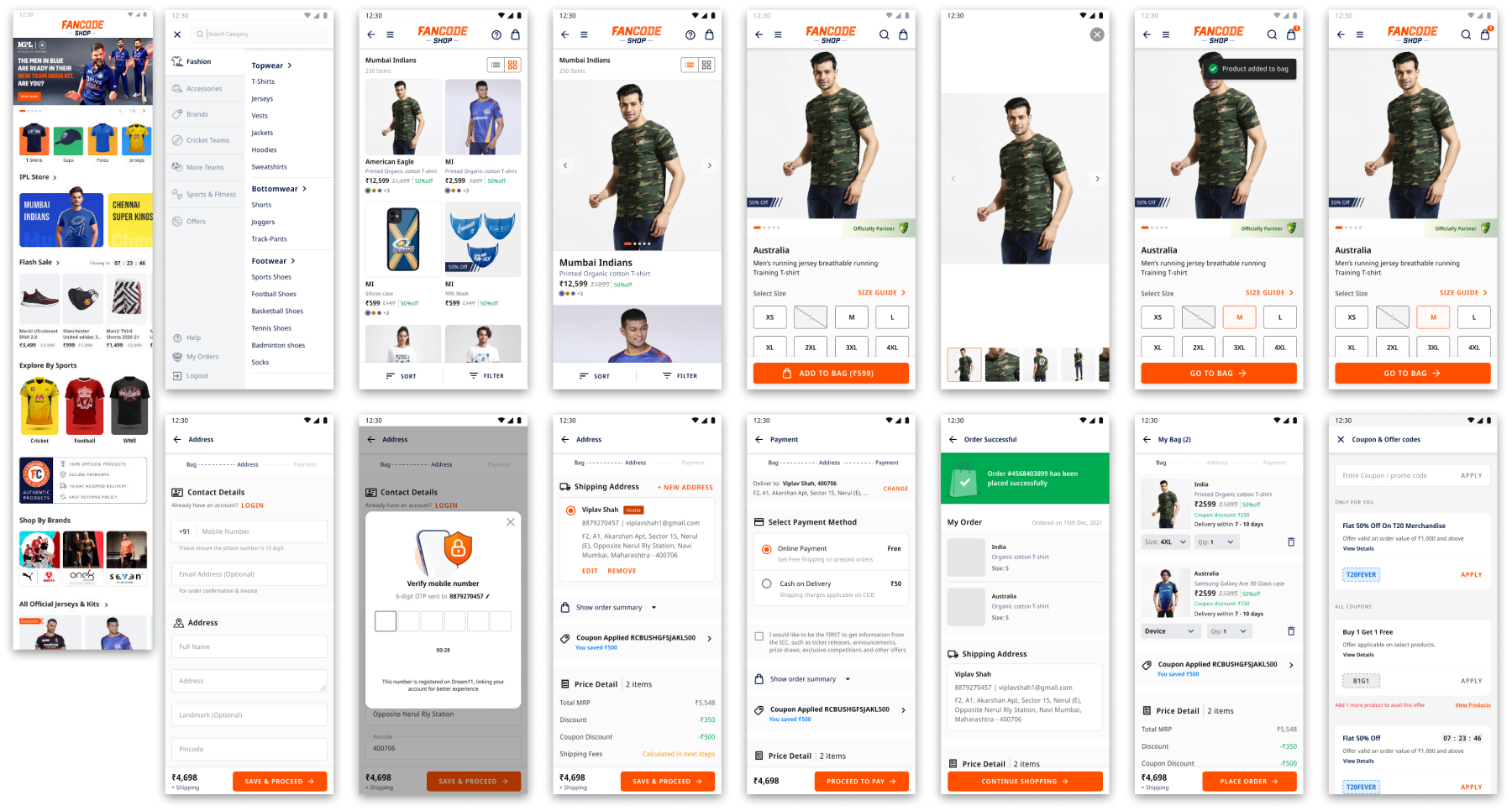
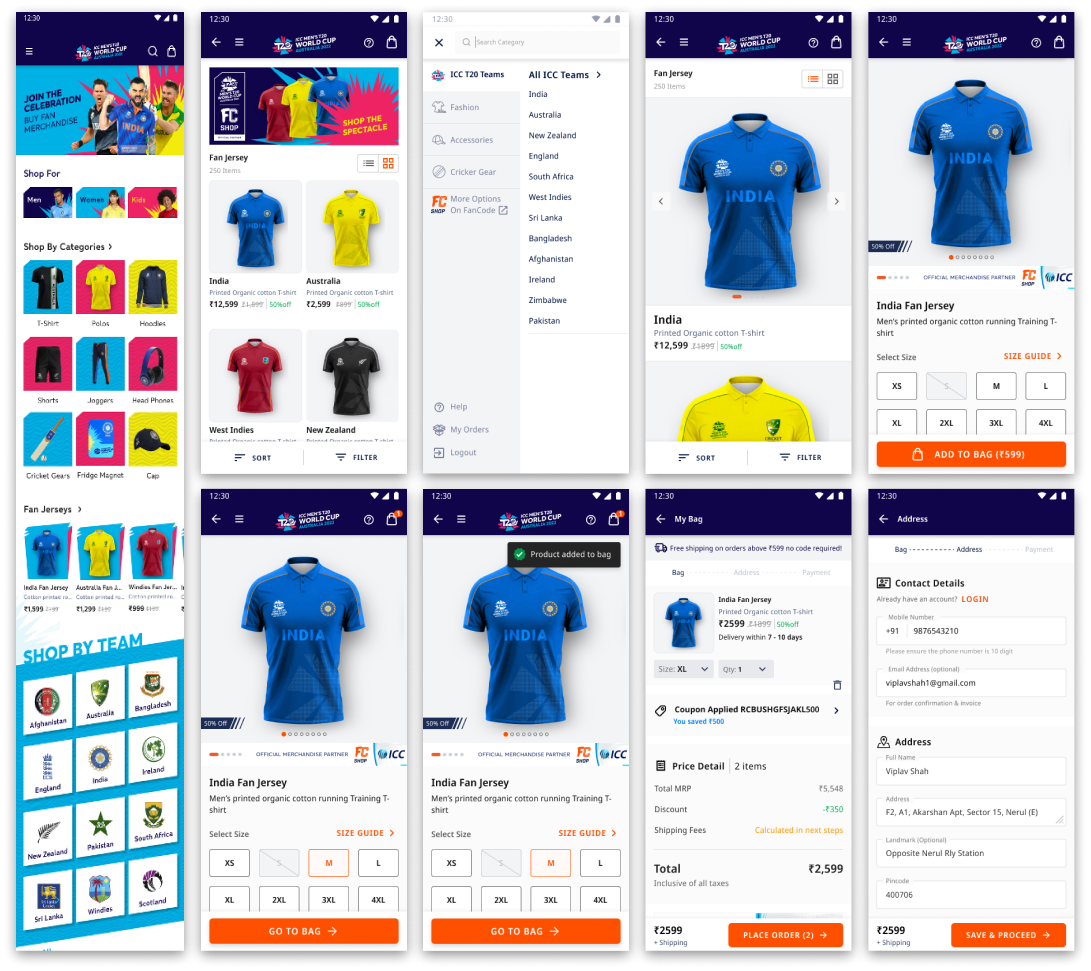
The final UI carried the full shopping journey — browse, product detail, size & variant selection, cart, address, payment and order tracking — first on mobile, then extended to web.
The design was templatized so partners could spin up their own storefronts — including a custom store for the International Cricket Council to sell T20 World Cup 2022 merchandise, built to their brand guidelines on top of the same system.
The project was a success — it drove a tremendous response from users, and FanCode Shop was spun off into a separate company with plans to scale it further. The metrics below are measured over the first eight months after release.
Let users define the structure. Card sorting turned an internal debate about categories into a clear, fan-validated catalogue — Product Type and Team Affiliation won.
Design for the real device. Going mobile-first from paper wireframes onward kept the experience honest about where fans would actually shop.
Good systems scale. Templatizing the store made white-label partner storefronts — and a standalone company — possible off the same foundation.